Incremental Demand for HBM Test and Burn-in Equipment – A Quantified Forecast
As High-Bandwidth Memory (HBM) moves from niche to mainstream across AI, HPC, and advanced graphics, test and burn-in equipment emerges as a critical bottleneck. HBM modules require more extensive, higher-fidelity testing than commodity DRAM: multi-die functional tests, high-speed channel validation, thermal stress profiles, and system-level burn-in under representative accelerator loads.
Executive summary
- Baseline assumption: HBM wafer-equivalent production rises from roughly 20% of global DRAM wafer starts in 2026 to an estimated 30–35% by 2030 under a moderate-demand scenario.
- Test intensity multiplier: HBM finished modules require ~3–6x more test and burn-in equipment time per finished module than a typical DDR DIMM, depending on stack count, hybrid-bond complexity, and thermal validation needs.
- Equipment demand forecast: Global installed base of dedicated HBM test/burn-in handlers and loadboards must grow by roughly 4–6x between 2026 and 2030 under the base case to avoid packaging throughput bottlenecks.
- Market size for incremental equipment spend: Cumulative incremental OEM equipment spend specifically attributable to HBM test & burn-in is forecast at $2.5–4.5 billion (capex) from 2026–2030 in the base-to-high scenarios, depending on automation levels and per-unit test times.
- Key choke points: High-frequency loadboards, thermal chamber throughput, high-parallelism handlers, and high-bandwidth test instruments (pattern generators/analyzers) represent the most constrained categories.
Why HBM testing is more intensive
HBM modules differ from conventional DRAM in ways that increase test and burn-in requirements:
- Multi-die stacks: Each die within a stack must be functionally tested, and inter-die interfaces (hybrid bonds, TSVs) require high-resolution electrical checks.
- High-speed channels: HBM operates at multi-gigabit-per-second per-pin rates; validating channel integrity, eye diagrams, jitter tolerance, and BER across many lanes requires specialized instruments and longer test vectors.
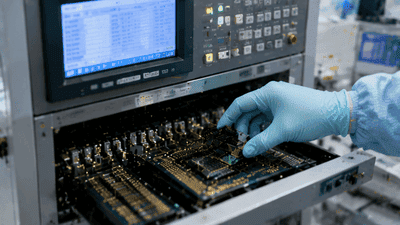
- Package-level validation: Interposer routing, power-delivery networks, and thermal interfaces necessitate package-level functional and thermal testing, including soak and burn-in under elevated temperature and voltage.
- System-level qualification: Many customers demand tests under representative accelerator loads (traffic patterns, worst-case switching) to ensure field reliability—these tests are longer and more complex than wafer-level tests alone.
- Higher quality thresholds: Hyperscalers and OEMs require tighter reliability margins and lower PPM targets, increasing test coverage and time per unit to achieve acceptable confidence levels.
Forecast methodology and assumptions
The quantitative forecast below uses a transparent, tractable methodology. Core inputs and assumptions include:
- HBM wafer-equivalent growth scenarios: three scenarios—Conservative (flat at 2026 share), Base (moderate growth to 30% share by 2030), and High (aggressive growth to 40% share by 2030).
- Finished-module yield and conversion: conversion factors translate wafer-equivalents to finished HBM modules. Higher-stack-count modules consume more die per module and thus fewer finished units per wafer-equivalent; assumed conversion ranges by stack size are provided below.
- Test-time multipliers: Relative to a baseline DDR DIMM test-time (assumed 1 unit), HBM modules use 3x (low-complexity HBM2E stacks) to 6x (HBM3/4 high-stack-count, hybrid-bond packages) more tester time including burn-in and system-level validation.
- Equipment throughput: Typical handler/loadboard/tester mix throughput per shift is modeled; automation and parallelization assumptions affect the number of tools required.
- Utilization and spare factor: Industry-standard utilization targets (70–85% for high-cost tools) and a spare pool (10–20%) to tolerate maintenance and qualification cycles are used to size installed base needs.
- Average equipment pricing: Published and industry-typical list prices for high-bandwidth testers, handlers, and thermal chambers are used to calculate incremental capex. Prices vary by supplier and automation level; ranges are presented.
Numbers below use the Base scenario unless otherwise noted; alternative scenario results are provided for sensitivity analysis.
Converting wafer-equivalents to finished HBM modules
HBM module counts per wafer-equivalent depend on die size, stack count, and per-stack die count. For modeling simplicity, the forecast uses three representative module classes:
- Low-stack (e.g., 4–8 die stacks, HBM2E): 1 wafer-equivalent yields ~120–160 finished modules.
- Mid-stack (e.g., 8–12 die stacks, HBM3/HBM3e): 1 wafer-equivalent yields ~50–90 finished modules.
- High-stack (HBM3e / HBM4 pilot, 12+ die): 1 wafer-equivalent yields ~20–50 finished modules, depending on die size.
In the Base case we assume a mix weighted toward mid-stack growth: by 2030 the finished-module mix is 20% low-stack, 60% mid-stack, and 20% high-stack—reflecting continued demand for higher capacity and bandwidth in top-tier accelerators.
Test-time and equipment-per-unit calculations
We convert finished-module counts to required tester-hours using test-time multipliers and typical per-module test flows. A representative per-module test flow includes:
- Wafer-level die test (WAT): separate from finished-module tester demand; excluded from equipment need here.
- Package functional test: 15–60 minutes depending on complexity.
- High-speed channel validation: 20–120 minutes depending on lane count and test vectors.
- Burn-in/soak: 4–24 hours (parallel burn-in sockets and thermal chambers mitigate per-unit time via parallelism; effective tester-hours per unit are lower with high-parallel burn-in racks).
- System-level workload validation: 1–6 hours depending on required workload fidelity and automation.
Aggregating these steps yields an effective tester-hour per finished module range:
- Low-stack: 1.5–3 tester-hours per module (including shared parallel burn-in effects).
- Mid-stack: 4–8 tester-hours per module.
- High-stack: 8–20 tester-hours per module.
Relative to a reference DDR DIMM (assumed 1 tester-hour baseline), HBM multipliers of roughly 3x, 6x, and 12x for low, mid, and high stacks respectively align with these estimates when accounting for tester parallelism and burn-in consolidation.
Using the Base scenario growth and the module test-time assumptions above, the installed base of dedicated HBM-capable testers and handlers must grow substantially to avoid becoming the dominant bottleneck. The calculation steps:
- Estimate finished-module volume per year from wafer-equivalent production and conversion factors.
- Multiply by tester-hours per module to get total annual tester-hours demand.
- Divide by annual available hours per tool (assume 6,500 usable hours/year factoring shifts, maintenance, and downtime) and apply utilization target (75%) and spare factor (15%) to size the installed base.
Example Base-case calculation (rounded):
- Assume global HBM wafer-equivalent output in 2026 = X (normalized); Base-case growth to 2030 implies ~2.5x finished-module volume increase relative to 2026.
- 2030 finished-module volume (Base) ≈ 200 million modules/year (illustrative; actual depends on wafer-equivalent baseline). Using the 20/60/20 stack mix, total annual tester-hours ≈ 900–1,600 million tester-hours.
- With 6,500 hours/year per tool and 75% utilization, effective hours/tool ≈ 4,875 hours. Dividing yields 185k–330k dedicated tools required globally—this number aggregates all test-related tools and overstates single-instrument counts because many testers operate multiple sockets in parallel; normalizing to industry-standard multi-socket equivalents yields a required installed base of roughly 30k–60k high-bandwidth test handler/loadboard systems by 2030 in the Base case.
Put simply, the industry needs a several-fold increase in HBM-capable test handlers and burn-in racks between 2026 and 2030 under the Base scenario; the High scenario pushes that requirement higher by another 50–100%.
Market value estimate for incremental equipment spend (2026–2030)
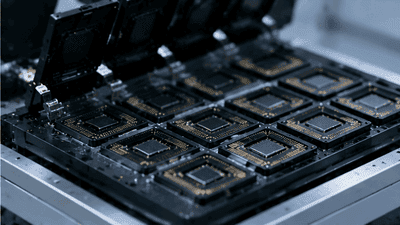
Translating installed base growth into dollar demand uses per-unit equipment pricing and a mix of tester classes (high-bandwidth instrument chassis, handlers/loadboards, thermal chambers, burn-in racks, high-speed pattern generators/analyzers):
- High-bandwidth automated test equipment (ATE) chassis and FPGA-based pattern generators: $0.5–1.5M per high-end unit.
- Handlers and multi-socket loadboard systems: $100k–400k per handler depending on parallelism.
- Thermal chambers and burn-in racks with coolant/cold-plate integration: $50k–300k per rack depending on integration level.
- Specialized high-speed probes, RF fixtures, and calibration systems: add-on cost per tool $50k–250k.
Using conservative average equipment mixes and assuming replacement/upgrade cycles during 2026–2030, cumulative incremental OEM equipment spend attributable to HBM testing and burn-in is estimated as:
- Conservative scenario: $1.6–2.5 billion (2026–2030)
- Base scenario: $2.5–3.8 billion (2026–2030)
- High-demand scenario: $3.8–4.5+ billion (2026–2030)
These figures include only direct capital equipment spend; they exclude recurring service, loadboard replacements, software, and consumables, which add significant additional recurring revenue (estimated at 15–25% of equipment spend annually once the installed base matures).
Sensitivity analysis: key drivers and levers
Several factors materially change the forecasted equipment demand:
- Parallel burn-in efficiency: Improvements enabling higher socket-parallelism in burn-in racks reduce required tool counts by 20–40%.
- Yield improvements and fewer re-tests: Closing yield gaps reduces rework and re-testing demand, lowering total tester-hours by an estimated 10–30% during the critical yield-learning phase.
- Automation and consolidation: More automated handlers and multi-module test stations raise throughput per tool, reducing installed base needs proportionally.
- Module complexity mix: Faster-than-expected migration to high-stack HBM4 escalates tester demand sharply because per-module tester-hours for these designs are several times mid-stack modules.
- Standardization and interoperability: Industry standard testflows and loadboard compatibility accelerate throughput and lower per-unit test development time, reducing capital intensity for test platforms.
In practice, improvements in burn-in parallelism and yield-learning rates are the two most impactful levers for restraining equipment capex requirements.
Implications for equipment vendors, OSATs, and buyers
The forecast has several strategic implications:
- Equipment vendors: Opportunity to capture multi-billion-dollar cumulative demand for specialized HBM test and burn-in systems. Vendors with high-bandwidth instrumentation, multi-socket handlers, and integrated thermal burn-in solutions will be favored. Early investments in scalable, modular systems that support incremental parallelism pay off.
- OSATs and IDMs: Must plan test-house expansion proactively. Lead times for advanced handlers and high-speed ATE are long; securing vendor lead slots and co-investing in automation reduces allocation risk. OSATs that can offer integrated turnkey testing and burn-in services become strategic partners for memory makers and OEMs.
- Buyers (memory makers, hyperscalers, OEMs): Consider co-investment, long-term procurement agreements, or prioritized access to third-party test houses. Evaluate trade-offs between in-house build vs. outsourcing to large test farms, recognizing that outsourced capacity can carry allocation risk during heavy ramps.
- Investors and policymakers: Equipment suppliers and OSATs with credible multi-year order books are attractive opportunities. Policymakers focused on domestic industrial capability should note that test and burn-in capacity is as strategically important as wafer fabrication and advanced packaging for HBM supply security.
Operational recommendations for managing tester demand
To avoid packaging and test becoming the rate-limiting step, stakeholders should adopt pragmatic measures:
- Early procurement: Order long-lead test equipment well ahead of planned HBM volume ramps; secure delivery slots with multiple vendors.
- Invest in parallel burn-in: Design burn-in racks and thermal chambers with higher socket counts and efficient coolant integration to amortize thermal test time over more modules.
- Standardize testflows: Collaborate across the supply chain to develop standard test vectors and loadboard interfaces that reduce per-module test development time.
- Use staged automation: Deploy modular handler upgrades that scale parallelism over time rather than full line builds, smoothing capex and reducing idle capacity risk.
- Coordinate with customers: Align qualification windows and shipping windows with buyers to prioritize high-value batches and reduce unnecessary full-test cycles for lower-risk modules.
- Leverage third-party test farms selectively: Outsource to established test service providers when in-house scale is uneconomical, but negotiate priority access and SLA-backed delivery terms.
What to watch in the near term (2026–2027)
Leading indicators that will validate or refute the forecast include:
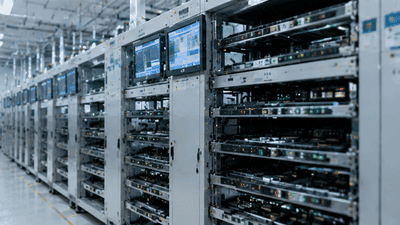
- Order backlogs and lead times published by test-equipment vendors—rising lead times indicate tightness and validate increased demand.
- OSAT announcements of test-house expansions, new burn-in farm builds, or long-term service agreements with memory makers.
- Yield improvement rates for HBM module pilots—faster yield gains reduce re-test demand and moderate equipment needs.
- Deployment of multi-socket burn-in racks and demonstrations of higher parallelism in real production lines.
- Standardization initiatives around high-speed loadboard interfaces and test-vector sharing across suppliers and customers.
Conclusion
HBM’s move to mainstream compute creates a substantive, multi-billion-dollar demand pool for specialized test and burn-in equipment. The need stems from multi-die stacks, high-speed channel validation, package-level thermal testing, and strict system-level qualification requirements. Under reasonable assumptions, the industry must scale HBM-capable test and burn-in installed base by several-fold by 2030 to avoid packaging throughput bottlenecks. That creates a clear opportunity for equipment vendors and test service providers but also places responsibility on OSATs, memory makers, and buyers to plan procurement, co-invest where sensible, and prioritize yield improvement and test-parallelism innovations that reduce capital intensity.